LIVE: Israeli Hostages ARE FREED, ICE Goes To Chicago + More | EP 184
Trump Brokers Historic Middle East Peace Deal as Kirk Investigation Unfolds
Estimated read time: 18 minutes
Quick Summary
- Donald Trump negotiates historic peace deal bringing home Israeli hostages after two years
- Kyron Lacy investigation reveals new evidence contradicting initial public narrative
- Brandon Tatum debunks conspiracy theories surrounding high-profile cases
- Family reactions to police incidents show importance of honest accountability
Table of Contents
Trump’s Historic Middle East Peace Achievement
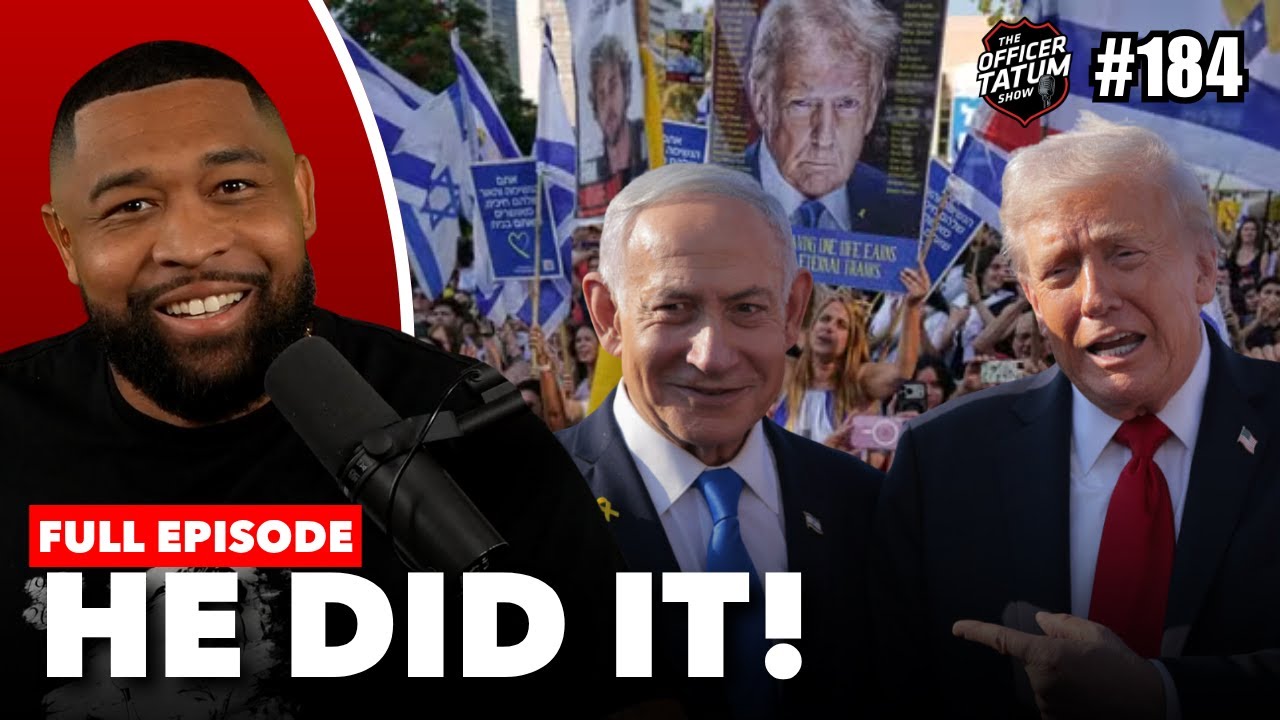
Donald Trump has accomplished what many thought impossible – a comprehensive peace deal that brings home Israeli hostages after two harrowing years in captivity. As Brandon Tatum explains, twenty courageous hostages are returning to their families, with an additional twenty-eight being returned, though sadly eight of these are deceased.
The significance of this achievement cannot be overstated. Trump addressed both the Knesset in Israel and leaders in Egypt, signing what he called a deal “3,000 years in the making.” Behind him sat representatives from multiple nations, including France’s Macron, demonstrating the international scope of this agreement.
Benjamin Netanyahu’s response was telling: “No American president has ever done more for Israel. And as I said in Washington, it ain’t even close.” This statement comes from a leader who, according to critics, supposedly wanted the war to continue. Yet here he is, signing a peace deal and thanking Trump for his pivotal leadership.
Tatum emphasizes a crucial point often overlooked – these hostages endured unimaginable conditions. “Just imagine being in a dungeon for two years, getting mutilated… in a dark room, probably didn’t even see the light of day for years.” The emotional weight of families reuniting after such trauma underscores the human cost of this conflict.
Ali Beth Stuckey’s Masterclass on Abortion Debate
In a powerful debate performance, Ali Beth Stuckey systematically dismantled pro-abortion arguments using biblical logic and careful questioning. Her approach was methodical, starting with establishing agreed-upon definitions.
“Abortion, the intentional killing of a human being in the womb. Can we agree on that?” Stuckey asked her opponent, who eventually had to concede that abortion involves killing human life in the womb.
Stuckey then brilliantly connected biblical principles about the heart’s intentions to the act of abortion. She referenced Matthew 5:28, where Jesus teaches that lustful thoughts constitute adultery in the heart, and Matthew 5:22 about anger being equivalent to murder in one’s heart.
Tatum expands on this point: “Before you go to the abortion clinic, you are feeling that I’m going to take this child’s life. That’s why you went to the abortion clinic and paid that money… In your heart, you’ve already made the decision that you’re going to kill this baby.”
The debate highlighted the importance of personal responsibility. As Tatum notes from his own experience having a child at 22: “I knew what I was doing when I was doing it, while I was doing it, before I did it… The time was when she came over the crib. That’s when I should have been thinking about it.”
Kyron Lacy Case: What Really Happened
The Kyron Lacy case has taken a dramatic turn with the release of new surveillance footage that contradicts initial public narratives. State troopers released video evidence showing what actually occurred during the fatal car accident.
The surveillance footage reveals Lacy’s vehicle “flying at a high rate of speed on the wrong side of the road.” Witnesses at the scene consistently identified the green Charger as the vehicle that caused the accident. One witness stated: “The green Charger collided with these cars… He was right now. And she had no choice.”
Tatum, drawing from his experience as a former police officer who has investigated multiple vehicular homicides, explains the investigative process: “A cop comes to the scene of an accident, they don’t go to the convenience store to look at the camera… They go to the scene first, they get statements first.”
The tragic end to this case came when Lacy fled from police during an arrest attempt and took his own life. Tatum poses a critical question: “Why would this kid, if he didn’t… if he was literally had nothing to do with this situation… Why would he even want to take his own life over this?”
The evidence shows Lacy was driving at high speed in the wrong lane, caused another vehicle to swerve resulting in a fatal crash, then fled the scene without stopping to help. The witnesses, not the police, were the ones who identified his vehicle and provided the license plate number to authorities.
When Families Face Hard Truths About Police Incidents
In a rare display of honesty and accountability, Tatum highlights families who faced difficult truths about their loved ones’ actions during police encounters. One particularly striking example involved Elijah, whose family watched body camera footage showing him pistol-whipping an off-duty officer.
The family’s response was remarkably honest: “We wish it wouldn’t have transpired that way. And it did. And my nephew, he made a decision that he should not have made… A lot of times y’all hear about how good an individual was, but their actions don’t depict who they were. But in this case, that’s really who he was that day. You know, just a bad decision.”
The video evidence showed Elijah pulling out a firearm, slapping the off-duty officer with it, then pointing it at the officer, who “responded what we believe in accordance with his training.”
This stands in stark contrast to another case where family members claimed their loved one “didn’t do anything” despite admitting he was on drugs, had a gun, had fired shots in public, and ultimately shot at police officers who responded to the scene.
Tatum reflects on this personally, sharing about his own cousin who received a 35-year sentence: “That was a decision that he made and he have to live with the consequences of his decision… But you ain’t gonna have me coming on the TV lying.”
Debunking Dangerous Conspiracy Theories
The proliferation of conspiracy theories surrounding high-profile cases has reached alarming levels. Tatum systematically debunks several prominent theories being spread online, particularly those about the Charlie Kirk incident.
One conspiracy theorist claimed Kirk was killed by “an exploding microphone, kind of like an exploding pager” orchestrated by Israel. Tatum demonstrates the absurdity of this claim by showing an actual microphone: “A 223 round won’t fit in this microphone… Where was the munition at?”
The evidence actually shows overwhelming proof against the actual suspect, including:
- Internet search history showing reconnaissance of the location
- Video footage of him walking with a rifle concealed in his pant leg
- Multiple cameras capturing his movements before and after the incident
- DNA evidence on the weapon and trigger
- Phone conversations where he admitted to his father what he had done
- Discord channel communications with incriminating content
Tatum warns about the danger of these conspiracies: “Remember what these people said… When the trial happened and the evidence is presented, you will be able to know who’s reasonable, who’s been fair, and who is pushing conspiracies to make money.”
He points out that many content creators see massive view increases when pushing conspiracies: “Their Instagram channel dead. They do a conspiracy. 10 million views. You like, well, that’s kind of weird. Now I see why you’re doing it. Because it’s making money.”
The real tragedy, as Tatum notes, is that these conspiracies overshadow the actual issues and victims: “The saddest part of all this is that because of individuals, plural, who are pushing conspiracies for money, Charlie Kirk’s death will become overshadowed in perpetuity in history.”
Key Takeaways
Q: What makes Trump’s Middle East peace deal historic?
A: It brings home Israeli hostages after two years of captivity, with backing from multiple Arab nations and international support. Netanyahu stated no American president has done more for Israel, and Trump called it a deal “3,000 years in the making.”
Q: What did the Kyron Lacy investigation reveal?
A: Surveillance footage showed Lacy driving at high speed on the wrong side of the road, causing a fatal accident. Multiple witnesses identified his vehicle as responsible. He fled the scene and later took his own life when police attempted to arrest him.
Q: Why are conspiracy theories dangerous to high-profile cases?
A: They divert attention from real perpetrators and victims, monetize tragedies for content creators, and overshadow the actual events in history. They also undermine legitimate investigations that have substantial evidence.
Q: How should families respond when loved ones are involved in police incidents?
A: With honesty and accountability, as demonstrated by families who acknowledged their relatives made wrong decisions despite being generally good people. This approach respects both the truth and the memory of their loved ones.
Final Thoughts
These cases demonstrate the importance of waiting for evidence before jumping to conclusions, the danger of conspiracy theories that monetize tragedies, and the value of honest accountability. Whether discussing international peace deals, tragic accidents, or controversial debates, the truth matters more than narratives that generate clicks.
As Tatum emphasizes throughout, we must focus on the actual perpetrators and issues at hand rather than chasing conspiracies that overshadow real victims and their legacies. The evidence in these cases speaks for itself when we’re willing to look at it honestly.